Why Does My Car Smell Like Rotten Eggs?

As cars are a daily part of most American’s lives, we tend to get very used to the way our specific vehicle drives, feels, looks, and even smells. This means it’s easy for most to notice small changes and issues in our vehicles immediately.

While most issues in cars affect how it feels to drive, you might also notice a change in how your vehicle smells. 

Vehicles produce a range of odors in countless ways, from the engine’s exhaust to the smell of burning oil or coolant. These smells might be noticeable, but they pale in comparison to the distinct odor of rotten eggs emanating from your vehicle. It’s hard to miss.

4 Reasons Your Car Might Smell of Sulfur/Rotten Eggs

Bad Catalytic Converter

A failed catalytic converter is by far the most common reason for this less-than-desirable odor from your vehicle. 

Catalytic converters are responsible for “cleaning” the engine’s emissions by removing harmful pollutants from exhaust gasses. 

Catalytic converter under vehicle

The “rotten egg” smell is often a product of hydrogen sulfide, a pollutant byproduct from combustion engines. Usually, this compound is converted into odorless sulfur dioxide by the catalytic converter, however, when there has been a failure within the catalytic converter this conversion will not take place and allow for hydrogen sulfide to exit the exhaust system. 

A failed catalytic converter can lead to a host of issues, but the most immediately noticeable might be a strong sulfur smell. If you suspect yours might be failing, you should have the problem addressed by a trusted professional as soon as possible. Otherwise, your vehicle may experience engine misfires, reduced performance, or could even catch fire.

Leaking Manual Transmission Fluid 

While the catalytic converter might be responsible for most cases of rotten egg odor, leaking transmission fluid may also be the perpetrator. 

Your vehicle’s transmission fluid helps to cool, lubricate, and provide hydraulic pressure for your gears, however, the fluid often has a pungent smell similar to the hydrogen sulfide we talked about earlier.

This generally only happens on manual transmission vehicles, as older manual transmission fluids were often sulfur-based. 

Close-up of manual transmission shifter

The easiest way to check this is to ensure your transmission fluid level has not dropped significantly and that there are no visible leaks around the transmission pan. If you do have a leak, it should be taken care of as soon as possible to avoid damage to your transmission. 

Failed Fuel Pressure Sensor or Fuel Filter

The fuel pressure sensor helps regulate the amount of fuel within the fuel rail. When the sensor is experiencing issues, it may allow excess fuel to enter the engine and cause the vehicle to run rich.

With this extra fuel to burn, there will be more pressure put on the catalytic converter. This can clog the catalyst, and allow unfiltered fumes to make their way through the exhaust. 

This same issue can occur with a clogged fuel filter, as it can also lead to the vehicle running rich and allowing increased pollutants from your exhaust. 

Exhaust Leaks

If the exhaust has a leak prior to the catalytic converter, the fumes leaking out will contain the pungent hydrogen sulfide. 

Most exhaust leaks will also be accompanied by increased engine noise, as they allow for sound to exit the exhaust before reaching the resonator and muffler.

Fixing this may be as simple as patching a small crack in the exhaust manifold, or could require the replacement of an exhaust component. 

Exhaust Diagnostics and Repair in Riverton

If you’re experiencing a strange smell or sound from your exhaust system, don’t delay having it diagnosed and repaired by a trusted automotive professional. 

The ASE-certified technicians at Matson Point S in Riverton have the expertise and equipment to properly inspect and repair your exhaust! Call or schedule online with us today.

What Does a Car’s Differential Do?

Unless you spend a lot of time under your car, understanding the intricacies of how power generated by the engine reaches the wheels can be difficult. Most people know the fundamentals of how an engine and transmission work, but an often overlooked but equally important part of the drivetrain is the differential. In this article, we will dive into the differential, the last stop before your car’s power reaches the wheels. 

What is a Differential?

To understand why our vehicles have differentials, consider a running track. Each runner has a lane they must maintain, but the inside of the track is a shorter distance than the ones on the outside. To avoid allowing this unfair advantage for the inside runner, the lanes on the track are staggered in favor of the outside lanes to make up for the differences in distance.

Running track diagram showing differences in distance by lane

Now take that same principle and apply it to the wheels of a vehicle. The wheel, or “runner”, on the inside of the corner you’re taking will have a shorter distance to travel than the wheel on the outside. This would cause the outside wheels to essentially be “dragged” along at the same speed as the rest of the wheels and lead to poor handling and rapid tire wear as the outside tire slips. 

To make up for this difference, differentials act as the staggered lanes, giving the outside wheel the ability to spin at its rate to maintain grip and catch up with the inside wheel despite the differences in distance. 

How Many Differentials Do Cars Use?

Differentials take the power from the engine and transfer it to two separate sides (one for each wheel being driven). Since the non-driven wheels can spin freely naturally, the differential is only connected to whichever two wheels receive power. Due to this, the majority of vehicles only use a single differential. 

The exception for this is all-wheel drive (AWD) and four-wheel drive (4WD) vehicles. AWD and full-time 4WD systems employ three differentials, one between each set of wheels and one in the center of the two axles (as each axle also spins at an independent speed). 

Vehicles with part-time 4WD systems only use two differentials, and instead use a transfer case between the axles rather than a center differential. Due to this limitation, part-time 4WD vehicles struggle to handle regular streets in 4×4 mode, as the two axles are not able to spin independently. 

Types of Differentials

There are a few types of differentials out there with varying purposes you should know.

Open Differential

The most common type, open differentials uses a tried and true design that allows each wheel to spin at its speed. The sole function of this type of differential is to provide comfortable handling and limit tire wear.

Open differentials are the type of differential used on the majority of commuter vehicles due to their simple design and ability to allow the wheels to spin at different speeds at all times. 

An open differential is made up of two halves, each connected to one side of the axle and each with a gear at the end (side gears). These gears are joined in the center of the differential with spider gears, which are small gears that allow each side to rotate individually, even if one side is spinning faster than the other. The whole system is driven from the driveshaft through the ring gear and drive pinion. 

Locking Differential

Take everything we’ve said about differentials and throw it out the window. Locking differentials are a special type of differential almost exclusively used in off-road vehicles, and their purpose is to do the opposite of what a traditional differential does. A locking differential ensures that each wheel is always spinning at the same speed. 

While this may seem counterintuitive, they’re perfect solutions for certain situations. Open differentials are great for when each wheel can find traction, but what about when traction is hard to come by? Locking differentials allows 100% of the torque to be used by the only wheel that has any traction. This is useful for off-roading and other low-traction situations where you want to maximize the effect of any traction you can find. 

Limited Slip Differential (LSD)

LSDs are the best of both worlds. They allow for each wheel to spin at its rate, but also allow for torque to be distributed to the side with superior traction. Different types of LSDs detect changes in traction in different ways, but the general idea remains the same. 

LSDs are primarily found in sports cars with a focus on handling performance, as their torque-distributing abilities help provide maximum grip and control through hard cornering, especially at higher speeds. 

Differential & Drivetrain Service at Matson Point S

If you’re experiencing handling problems, noises when cornering, or other signs of a problem in your differential, trust the expert technicians at Matson Point S to take care of you! Call or schedule online with us today for high-quality differential and drivetrain services!

How Long Can I Drive on My Spare Tire?

Spare tires have saved many of us from becoming stranded along highways or remote roads, and are a standard inclusion on most vehicles. 

In older vehicles, the spare tire was often the same tire being used on the rest of the vehicle. However, with the infrequent use of a spare, manufacturers began moving towards space-saving “donut” style spare tires, which are temporary tires much smaller and skinnier than their full-size counterparts. 

These tires are meant only to be temporary of course, but how temporary? How long can you drive on your spare tire?

Donut Spare

Space-saver spares, otherwise known as donut spares, are the size of spare tires used in most modern vehicles. These tires are smaller than the normal tire size and are only to be used for driving straight to the tire shop after encountering a flat. 

This type of spare is also inflated to a much higher tire pressure than a traditional tire. Most small/compact vehicle tires should be inflated to around 35 PSI, while donut spares often need about 60 PSI of pressure. 

These tires should be driven no longer than 50 miles, or however long it takes to get to the nearest tire shop. The difference in size and tread will cause less traction and durability than a normal tire, and the driving mechanics of the vehicle will be considerably thrown off. With the spare tire also having a smaller diameter, driving an excessive amount on your spare can cause damage to your transmission or differential. 

Full-Size Spare

On older and larger modern vehicles, it’s common to see the full-size spare instead of the donut-style spares, which have become more popular recently in the majority of vehicles.


However, full-size spares are much better in terms of longevity, as they are the same size tire that came on the car originally. This means that you can drive on a full-size spare considerably longer than a donut. 

This doesn’t mean you should settle for having a spare tire installed though, you should still have your spare swapped out for a new tire as soon as you can. Differences in tread, manufacturer, and width can make driving with it difficult. It’ll just drive more like a regular tire in the meantime.

How do I Drive Safely on a Spare?

If you run into a situation where you need to use a spare, there are some steps you can take to make sure you’re staying as safe as possible.

Don’t Drive Like You Normally Would

While it may be tempting to step on the gas and try to speed up your trip after stopping to change a flat, you should be doing the exact opposite. Since spares (especially donuts) don’t drive the same as a normal tire, you should limit your speed to around 50 MPH and give yourself more than enough time and space to safely slow down, change lanes, and take corners. 

Along with the differences in tire size and tread, using a spare can disrupt your traction control and stability control system. Without these safety mechanisms, it’s imperative to drive with caution in mind to avoid dangerous situations. 

Ensure Spare is in Proper Condition

Spares should be checked regularly for adequate tire pressure and check for any holes or leaks. The last thing you want to happen after getting a flat tire is for the spare to be flat as well. 

Before any long road trip, give it a quick look to make sure you’re prepared, especially if driving through rural stretches of highway with few tire shops along the way.

Be Extra Cautious in Bad Weather

Since the tread on spare tires is not up to the same spec as the tread on the rest of your vehicle’s tires, you should be especially careful in rain, snow, fog, or any other inclement weather conditions. Make sure to provide yourself extra time and distance to brake and turn, and drive defensively to avoid needing to drive evasively (even more than you would normally with a spare).

Run-Flat Tires

A few vehicles (namely BMWs and other luxury vehicles) may come from the factory equipped with run-flat tires. These tires are designed to temporarily drive after being punctured and follow similar driving guidelines to spare tires. Limit yourself to 50 MPH and around 50 miles of driving on the way to have it replaced. 

These tires are often labeled with ROF (Run on Flat), EMT (Extended Mobility Technology), or ZP/ZPS (Zero Pressure). These labels vary by manufacturer, but all are used to designate run-flat tires. 

Tire Replacement at Matson Point S

If you’re in the Salt Lake Valley and need a tire replaced, visit the friendly and experienced team at Matson Point S. We’ll help you choose, mount, balance, and install the right tire for your vehicle! Give us a call or schedule online today.

What is Engine Displacement?

When talking about cars, you may have heard a few random numbers thrown around in reference to the engine. From 2.0 to 3.6, to 4.3, these numbers can be confusing for the uninitiated but have crucial meaning for owners and mechanics alike. While these single-digit numbers with decimals refer to liters, it’s common to see CCs (cubic centimeters) or even cubic inches as measurements for the same metric. 

What Does it Mean?

All these numbers refer to the displacement of the engine, which is essentially the amount of space within the engine block used for combustion. Engine displacement is a huge deal, as it not only relates to the physical size of the engine within your vehicle’s engine bay, but also affects the power output, torque output, and fuel efficiency of the vehicle. 

Most vehicles will list their displacement in liters (i.e. 3.0L), while cubic centimeters are often used for small engines on bikes (i.e. 1000CC), and cubic inches became the norm in the early American automotive scene (i.e. Chysler’s 440 V8, 440 being the displacement in cubic inches). Nowadays, car and truck engine displacement is almost exclusively described in liters.

Audi V8 engine cover showing displacement number

Does Bigger Mean Better?

While many think the displacement number directly decides the power of the engine (bigger = better), that idea often falls short in practice in modern vehicles. The advent of turbochargers and other forms of forced induction becoming the “next big thing” in everything from grocery-getters to supercars has allowed smaller displacement engines to fight with their bigger counterparts in terms of power output and put them to shame in the efficiency department. 

The reason for this confusion comes from older vehicles, where in an oversimplified way, bigger engines meant larger combustions which meant more power. The increased size of the combustion chambers meant more air and fuel could be introduced, resulting in more powerful engines. While modern large V8s are still famous for their huge power outputs and displacement numbers upwards of 5 or 6 liters, the more efficiently designed smaller engines of modern vehicles with forced induction means that the benefits of huge engines are somewhat diminished, especially with their gas-guzzling tendencies. 

The common trope of “there’s no replacement for displacement” is one that came from the history of inefficient large engines being the only choice for those looking to go fast, but holds much less true today with modern engine designs. In 2019, Mercedes-Benz’s M139 set the record for the most powerful production four-cylinder engine at 416 horsepower. This new generation of potent undersized engines has changed the narrative on the necessity of large displacement in high-performance vehicles. 

Why Do Engines Have Different Displacements?

The most common type of engine, the inline-4, is found in everything from small econoboxes to large family SUVs and sports cars these days. These engines only use 4 cylinders, and in turn, require much less space to fit, weigh significantly less, and have lower displacement numbers. These engines are generally considered the least powerful and most fuel-efficient of the common engine configurations, but recent innovations have made them some of the most popular platforms with turbochargers and more efficient designs. 

Larger engines like V6s, I6s, and V8s have more cylinders, which means larger displacements. Often these engines are used for high-performance vehicles, heavier vehicles, or ones that require large towing capacity. 

Increasing displacement used to be an easy way for manufacturers to increase the power of a motor, but as emissions restrictions and gas prices have increased, so has the demand for performance vehicles built on small-engine platforms. That said, high-displacement sports cars are still available such as the Dodge Challenger/Charger and Ford Mustang in their V8 trims, for those looking for some old-school power and noise. 

Engine Service at Matson Point S

If you’re looking for quality engine services in the Salt Lake Valley, the ASE-certified technicians at Matson Point S have you covered! Our team has extensive experience working on all makes and models. Call or schedule online today.

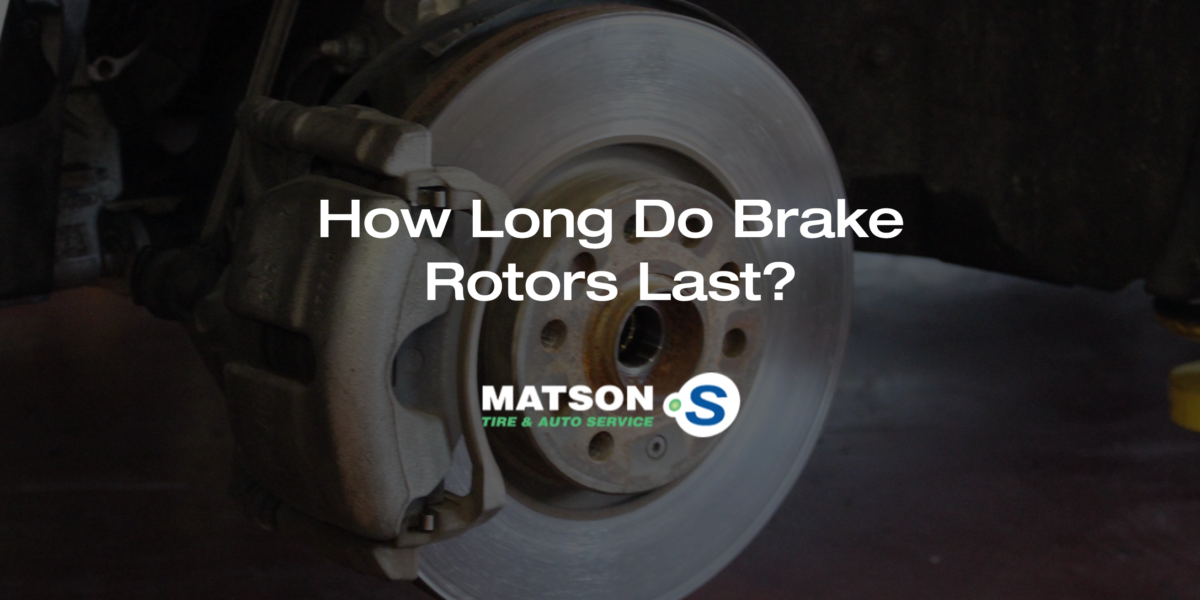
How Long Do Brake Rotors Last?

Most car brakes are made up of three major components. The brake pads are responsible for creating friction that allows your vehicle to stop. The pads are held within the brake caliper, which uses hydraulic brake fluid to press the pads against the final component, the rotors. Your brake rotors are the discs that spin with your wheels and allow the friction between them and the pads to slow the whole vehicle down. 

While all three of these components (pads, rotors, and calipers) need replacement eventually, pads and rotors specifically have important service intervals due to the nature of how they work. 

Why do Brake Rotors Need Replacement? 

With this constant friction coming at the expense of a small amount of both pad and rotor material, rotors start to lose their effectiveness over long periods of usage. 

Brake rotors last a surprising amount of time in spite of how they operate, but eventually, they will need replacement eventually.


How Often Should I Replace My Rotors?

Unfortunately, there’s no one-size-fits-all answer to brake rotor replacement intervals, as it varies on a range of factors.

One of the most important is how the brakes have been used over their lifespan. Those that brake later and more aggressively will find their brake rotors losing stopping power earlier, while those that brake slowly and gradually (or just drive less in general) will be able to use theirs for a longer period of time. 

Another major factor is the brand and type of brake setup itself. Higher-priced or OEM-quality replacements will often last much longer than their cheap counterparts. This is especially true of performance options such as carbon-ceramic, which will see increased stopping power and lifespan along with their high price tag. 

However, we do have a range of when you should be keeping an eye on the performance of your rotors as well as visually inspecting them from time to time. Most rotors will need to be replaced within 30,000-70,000 miles, dependent on the above factors.

The easiest way to know when its time for a brake job is mechanic recommendations. A trusted mechanic or dealer will often know when your brakes are past their prime and you should start considering a replacement. 

Rotors and Pads or Just Rotors?

While it can be tempting to save the cash and just get a rotor or pad replacement by themselves, getting them done concurrently can provide benefits. Getting both new pads and rotors means that your rotors will not be warped or grooved by new pads, and will in turn last longer. 

Brake shoe


How to Know When I Need New Rotors?

Besides a mechanic recommendation, there are a few common signs of old rotors that you should be aware of. These symptoms often mean the rotor is grooved or warped, and will only be worsened by new pads without replacement.

  • Vibrations when brakings
  • Squealing noise when braking
  • Pulsations from brake pedal
  • Visible scratches or corrosion
  • Smell of overheated brakes

Brake Service at Matson Point S

If your vehicle is in need of a brake service, trust it to Matson Point S in Riverton, Utah. Our friendly service advisors will help you find the right replacements for your vehicle, and our ASE-certified technicians will install them so you can have peace of mind in the safety of your brakes!

Call or schedule online with us today!

Copyright 2022 | Matson Auto

Website By Automatic Digital Marketing