
4×4 High vs. Low: What’s The Difference
4×4 vehicles provide drivers with the capability they need to tackle off-road trails, inclement weather, and other tough conditions that most vehicles just can’t handle. Unlike all-wheel drive vehicles, 4x4s often include the ability to engage and disengage the second set of wheels as needed. If you’ve ever owned or ridden in one often, you may have noticed the “High” and “Low” settings on the switch to engage the transfer case.
In this article, we’ll go over what those 4-High and 4-Low labels mean, how they affect your vehicle’s driving, and what situations to use each in.
What Do 4-High & 4-Low Mean?
Both of these settings engage your 4WD system, however it’s important to understand the differences between them to ensure you’re using the proper mode for the conditions you’re driving in.
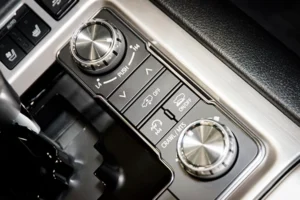
4-High
The 4-High mode (sometimes labeled as 4Hi or 4H) locks the front and rear axles of the vehicle together, meaning all four wheels will receive power at the exact same time, maximizing traction in slippery conditions.
4-High is best for situations where you want to maintain a normal driving speed with 4×4 engaged, such as along a snowy road or to help you get through sand or mud. It’s important to keep your speed below 55 MPH with 4-High engaged, as you could risk damaging the drivetrain if pushed too hard.
4-Low
The 4-Low mode (also labeled 4Lo or 4L) operates similarly to the 4-High setting, however, the major difference between the two is the low-range gear ratios used while the vehicle is in 4-Low. These low-range gears are comparable to driving a vehicle exclusively in first gear, as it provides increased torque at low speeds while preventing you from shifting into a higher gear.
4-Low mode is best used when in particularly difficult conditions, such as off-road trails or extreme weather. The low-range gearing increases the engine’s speed, which helps maximize traction from low-end torque and keeps your engine at a high enough RPMs to prevent stalling over slow and rocky terrain.
It’s important to note that 4-Low mode is not designed for regular street driving, and should only be engaged when absolutely necessary such as towing a heavy load or ascending a very steep incline. Pushing 4-Low above 10-15 MPH can spell trouble for the components of your drivetrain.
Should I Leave My Vehicle In 4-High Or 4-Low
It’s best to not leave your vehicle in any 4×4-engaged mode over periods of regular driving, and should instead only be switched on when necessary. Driving in either of these modes regularly will increase the strain put on your vehicle’s drivetrain and reduce efficiency.

4×4 & Drivetrain Services in The Salt Lake Valley
If you’re looking for service or repair for your 4×4 vehicle in the Salt Lake Valley area, don’t hesitate to reach out to the 4×4 experts at Matson Point S in Riverton, Utah! Our team has extensive experience in providing high-quality drivetrain, differential, and axle services on a wide range of makes and models. Don’t let drivetrain issues linger and cause you expensive problems down the line, give us a call or schedule online today to secure your appointment with the premier off-road and 4WD repair facility in the Salt Lake Valley!